
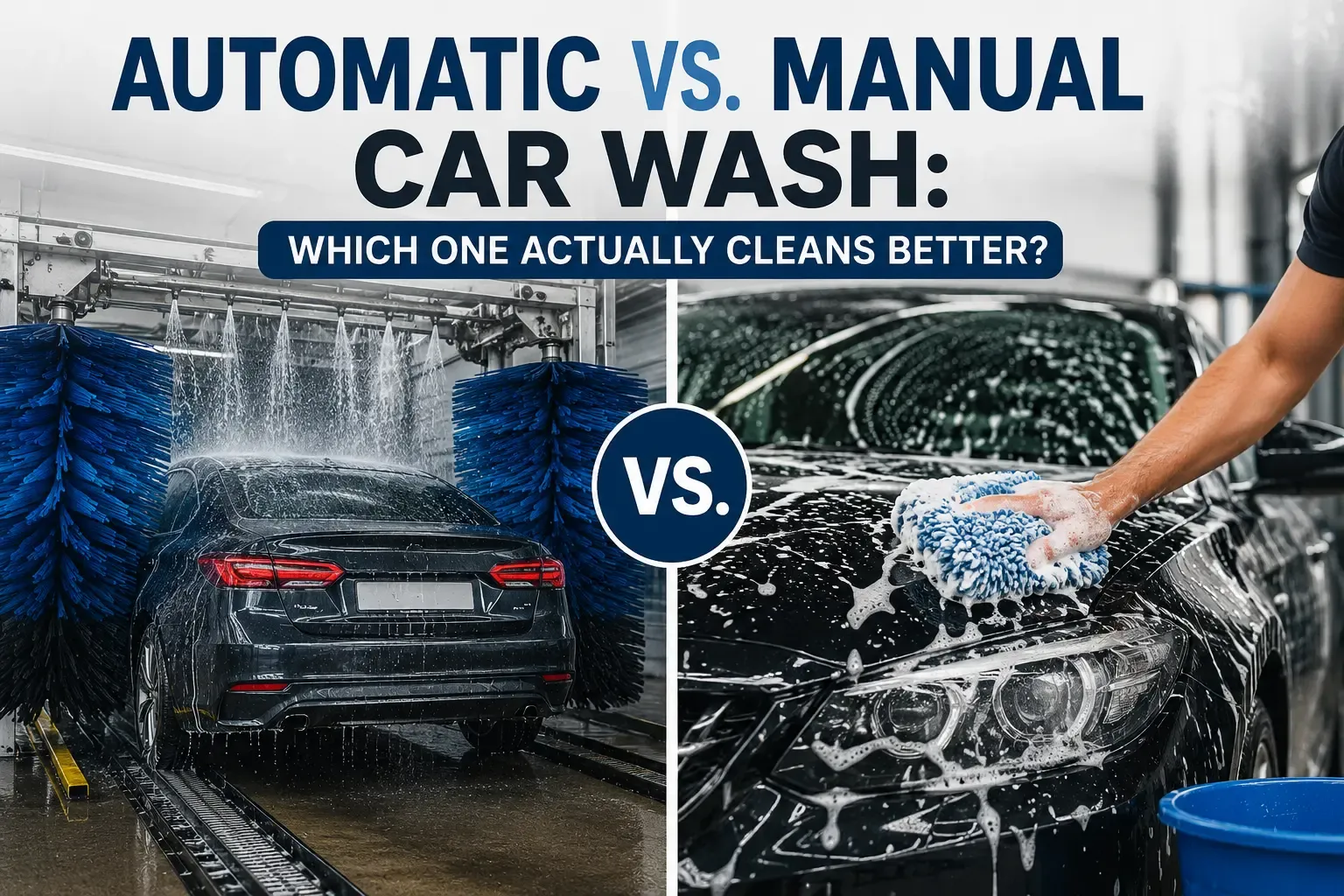
How automatic car washes work
Modern automatic car washes fall into two main types: brush-based and touchless. Brush systems use rotating foam or cloth material to scrub the surface, while touchless systems rely entirely on high-pressure water jets and chemical detergents.
The appeal is obvious — you're done in under ten minutes. But brush-based tunnels, especially older or poorly maintained ones, can introduce micro-scratches into your clear coat over time. Touchless systems are gentler on the paint, but they often struggle with stubborn road grime, bird droppings, or tree sap. If you regularly visit an automatic car wash, opting for a touchless facility is the safer long-term choice.
What manual washing actually means
Manual washing — whether you do it yourself or visit a professional auto detailing service — gives you full control over every inch of the car. Door jambs, lower panels, wheel wells, and trim pieces all get individual attention. A trained detailer will also catch paint chips or rust spots before they become expensive problems.
That said, technique matters enormously. Using a single bucket, a coarse sponge, or dragging a rag across a dusty panel can cause more damage than an automatic tunnel. The two-bucket method, a quality pH-balanced shampoo, and microfiber towels are the minimum standard for a safe hand wash.
Which services should you look for?
If you just need a quick clean between deeper washes, an express car wash or exterior car wash is perfectly reasonable. For paint health and resale value, consider scheduling a professional detailing session every one to three months — especially if your car is regularly exposed to road salt, industrial fallout, or harsh sun. Drivers who want the ultimate paint protection should look into ceramic coating, which dramatically reduces how often deep cleaning is needed.
The bottom line
Neither method is universally better — it depends on what you need right now. Automatic washes win on speed and everyday practicality. Manual washes win on thoroughness, paint safety, and long-term care. Used together, they cover every situation a car owner faces.
Looking for a trusted car wash near you? Browse our directory to find top-rated car washes in your city, complete with reviews, ratings, and contact details.